
Included: DVD+ 1 Digital Download
Run Time: 23 minutes
Overview
It is something thousands of law enforcement officers do thousands of times a day and night. Traffic stops. They, of course, run a wide gamut from an elderly lady (or gentleman) who has inadvertently run a stop sign, all the way up to the most dangerous, high-risk stops possible including felony eluders, armed robberies, carjackings, drug runners, multiple offending subjects who have sworn not to ever go back to jail, drunks and substance abusers, many of whom are, often, armed and extremely dangerous. Even the ‘joyriding by teens’ has taken on wholly new meanings over the years, because, often, the ‘joyriding’ is being done in stolen cars by youths who are armed and will shoot back at the police. Decisions frequently must be made in seconds or fractions of seconds. It’s the intersection where Training meets Preparation, and an officer who hasn’t been consistently doing both is testing fate.
It goes back to the old standby: What If? Every shift, every officer has ‘down time’ which can and should be used to think and plan, rather than spend invaluable time worrying about the weekend’s college football match-ups or who saw the craziest clip on Tik Tok. There is almost always time for What If scenarios with your partner on every shift. Period. Are you using it wisely? One of those What If scenarios worked out well in advance with your partner (or, even in your own mind) could save your life. It may well have been a factor in the topic of this course from In the Line of Duty in which an Indiana officer had to make several key decisions and choices all in the space of a few seconds. Watch and review. Ask what YOU would have done if it had been you making the traffic stop that fateful night. Also, ask yourself if you had a treasure trove of What If scenarios under your belt, could they have possibly proven to be absolutely life-savers in this incident?
THE PROGRAM/KEY POINTS
Veteran officer and In the Line of Duty Technical Advisor Sgt. (Ret.) Betsy Brantner Smith says, unquestionably, “…every officer should see this video (program)…because, there are so many invaluable lessons.” Of course, any final takeaways will be up to you, but we urge you to give it your undivided attention.
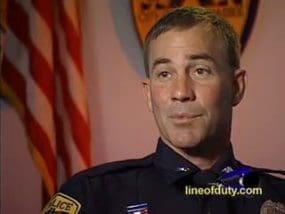
It was a nighttime traffic stop in a mid-sized Midwest city, and because of ongoing civil litigation, the officer’s name and department will not be identified.
He has, however, been found not culpable for the direction this traffic stop took nor its final outcome. He remains a member in good standing with his department and continues to have an exemplary record.


Reviews
There are no reviews yet.